Showing posts with label prefabricated. Show all posts

How Prefabricated Building Differ From Site-Build Homes

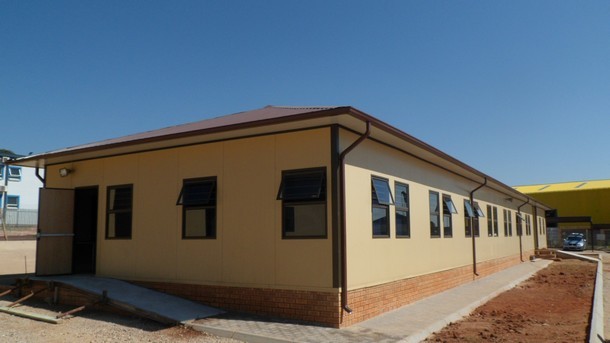
Prefab houses have changed significantly since the ones Sears used to sell through their catalog. The new generation of architect & home buyer has sparked a movement in the prefab industry based on spirit & imagination. As a consequence a variety of modern modular homes that challenge all previous ideas of prefab houses has been born. Those uninteresting boxes have been transformed to gorgeous & affordable homes that can be personalized to the level of uniqueness you wish.

How do prefab homes differ from on-site homes?

Since the majority of components (panels and roofs) of prefab houses are constructed in a factory environment, they can be finished inside a matter of a few weeks, in contrary to months. Most importantly they don’t experience the usual on-site construction delays. However, prefab houses must fulfill specific guidelines, rules and building codes that usually surpass those of conventional on-site houses.

When thinking about buying a prefab house, it’s critical to shop around, as not all firms that make modular houses are alike. There can be dramatic dissimilarities in price, quality and service of course. As with buying or constructing any house, it’s important to make your research.

Do all prefabricated buildings look the same?

Opposite to popular myth, prefab homes don’t all look alike. There are no design limitations with such homes. You’ve the luxury to build any style of prefab house you want – be it a conventional center-hall colonial or a Mediterranean. You can incorporate any style of architectural detail that you’re looking for. Almost all host plans can be turned into prefab houses, which entails you can build your dream house.

Facts about prefab houses:

  • The majority of prefab house firms are equipped with in-house engineering departments that use Computer Aided Design (CAD).
  • Prefab houses can be constructed for accessible living & designed for future conveniences.
  • Home loans & insurance premiums for prefab buildings are the same as site-built houses.
  • Prefab houses are faster to build compared to 100 percent site-built houses.
  • Prefabricated builds can be employed for commercial purposes – for example, office buildings.
  • Prefab homes designs differ in terms of style and size.
  • Prefab homes are known to be a form of green building.
  • Prefabricated houses can be constructed on crawl spaces & basements.

Prefab houses are certainly more affordable than site-built houses. Their shorter construction time will save you big on the overall construction. Give Aussie Panel a call now if you’d like to give prefabricated buildings a try!

  • Digg
  • Del.icio.us
  • StumbleUpon
  • Reddit
  • RSS

Facts That Make Prefabricated Houses Unique

Prefabricated buildings are a kind of unified construction solutions with their fundamental parts made from light-weight, yet durable materials such as steel and EPS. The method of constructing prefabricated houses are ideal applications for rooftop houses, commercial buildings or office rooms, study rooms, garden houses, or even your gym. Exploring this type of construction more in-depth, you will surely find that the overall pros outweigh its cost.


Are prefabricated homes more expensive than those built on-site?

Prefabricated buildings typically save you quite a bit of money. They are pre-manufactured in a factory and are built relatively quickly. However, it depends on the size of the building. Furthermore, all inspections are performed by the quality control team at the factory during each manufacturing phase before they are transported to their permanent locations. The prefabricated buildings nowadays also come with all the modern equipment, facilities, and amenities that you found in any lavished urban home. The price of prefabricated buildings depends on the complexity of the design and specifications. Electrical, plumbing, and duct work can also be quoted for at the same time.

How is a prefabricated building assembled?

Prefabricated houses are factory-built homes that are built in a climate-controlled area. The semi-finished sections are transported to the building site and then assembled with cranes. This process resembles just like a child playing with Lego blocks. Prefabricated buildings cannot be moved after they have been placed and set on their foundations. If you are designing your own home, it’s essential to ask specific questions, as different manufacturers operate under different principles and guidelines. However, reputed manufacturers offer hundreds of personalized features, and that is unlimited as well. As per requisition, they can add ceramic floors, solid-surface countertops, various cabinet styles, and wood species, exterior finishes, plumbing fixtures, and many more things as well. So you can essentially customize your prefabricated houses for transforming it into a dream home.


What are the benefits of owning a prefabricated house?

Prefabricated buildings can be more affordable than site-built homes. Its shorter building time will save you money on the overall construction. The pre-build parts are covered under a strict quality control system; hence there is no less to inspect after the installation. Prefabricated houses are much more energy-efficient, so your monthly energy bill will be substantially less. You have several options of homes from which to choose before you and all are environmentally friendly. Unlike regular homes, prefabricated buildings can be built on subdivisions and can be expanded as well. Such structures have also complied with the country’s guidelines.

Buying a prefabricated home

Many companies are building and selling modular homes. You can order pre-designed or pre-fabricated buildings that need nothing but installation, or you can customize it as per your wish. You can even purchase one straight from Aussie Panel! You can custom design your prefabricated house by calling them on +61 (0) 411867333 today!

  • Digg
  • Del.icio.us
  • StumbleUpon
  • Reddit
  • RSS